When to visit Studlagil Canyon for turquoise water
The basalt is there in every month, but the water below it is not always blue. The color of the river depends on a reservoir far upstream, and in most years it switches from blue-green to silty gray somewhere around August. Below we explain why, then go month by month so you can weigh the odds of blue water against daylight and the cruise calendar.
Why the color changes at all
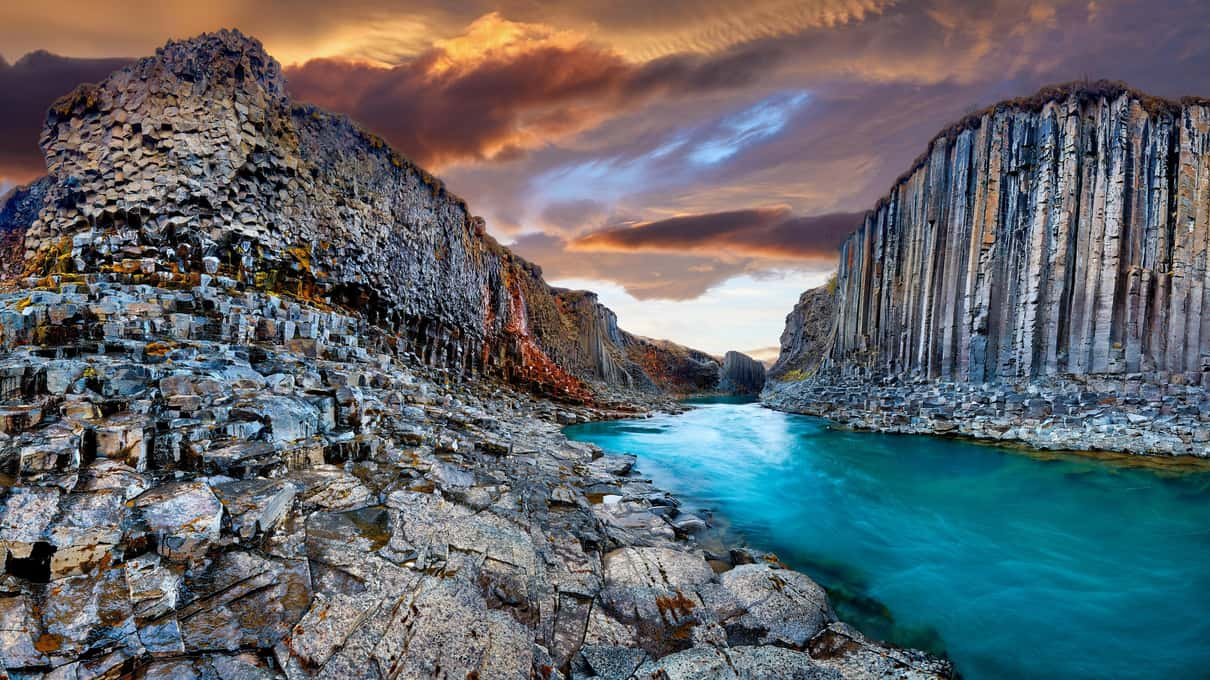
Stuðlagil, written Studlagil once the Icelandic ð is dropped, was cut by the Jökulsá á Dal, a glacial river that locals shorten to Jökla. Its water comes off the north side of Vatnajökull thick with fine silt, which is why glacial rivers usually look milky. Upstream of the canyon, the dams of the Kárahnjúkar hydropower plant hold much of that water back in the Hálslón reservoir and send it east toward Lagarfljót to make electricity. With most of the glacial flow taken away, the river that still runs through the gorge is smaller and much clearer. On a bright day that reduced flow shows as blue-green against the dark columns, the color you see in the listing photos.
The late-summer switch to gray
Hálslón fills up through the summer melt. In most years it reaches the top from about August, and the surplus spills over the dam into the old riverbed. That overflow is raw glacial water, so the canyon fills with a silty gray-brown current and the river runs noticeably higher. The blue does not come back until the spill stops, which usually means well into autumn. The start date shifts from year to year with the melt on the glacier, so nobody can tell you in spring what the water will look like on a given day in late August.
The operators say so themselves. Tanni Travel's small-group hike and Marina Travel's private tour both warn on their listings that the river ranges from turquoise to gray depending on the season and water conditions. Read a bright blue listing photo as a good day that someone caught, not as a promise for yours.
The columns look the same in any month. Even above gray water, walls of basalt up to about 100 feet (30 m) high line the gorge, and they are what the canyon is famous for. How the canyon formed tells why the river ran gray and high through it until the dam was built.
Month by month at the canyon
The table sums up the usual pattern. Treat each row as odds, not a forecast.
| Month | The river, usually | Daylight | Tours from the port |
|---|---|---|---|
| May | The clearer flow in most years | Long and growing | The cruise months begin, roughly |
| June | The clearer flow in most years | The longest days of the year | Running |
| July | The clearer flow in most years | Very long | Running |
| August | The overflow often starts, turning it gray | Long, then shortening | Running |
| September | Often gray from the overflow | Shortening fast | The cruise months wind down, roughly |
| October to April | Clearer again once the spill ends, in most years | Short | Mostly outside the cruise months |
June and July pair the safest odds of blue-green water with the longest light. May and September are possible, with May more likely to be clear and September more likely to be gray. Port tours keep to the cruise calendar, which in East Iceland means roughly May to September. Outside it you would be driving yourself on roads that may be icy, and the descent to the riverbank on the east side is not advised once the path freezes.
East Iceland weather in summer
Summer highs in the east sit around 50–60 °F (10–16 °C), and a sunny spell can give way to rain within the hour before the sun comes back. Wind across the open rim of the valley tends to make it feel colder than the thermometer says. Light matters for the color too. In full sun the clear flow tends to glow, while under thick cloud the same water reads darker and greener in photos. You cannot choose the weather on a cruise day, so dress for both. Our packing guide goes through the layers.
What time of day you arrive
From the ship, the clock is mostly set for you. Tours leave Seyðisfjörður in the morning (Saga Travel at about 9 am, Marina Travel's private car at about 8:30 am), and the road over the mountain pass and through Egilsstaðir into Jökuldalur eats a good share of the day. BusTravel Iceland reckons the road takes about 3 hours of its 5-hour day. That puts the coaches and minibuses at the canyon from late morning to midday. The sun is high by then, and most of the day's groups arrive around the same time.
Driving yourself opens up the edges of the day. In June and July the light lasts late into the evening, so you can reach the car parks early or late, after the tour groups have mostly gone and while the sun sits low over the valley. The self-drive guide covers road 923 and where to park.
How far ahead to book
Cruise-day seats fill by the ship's calendar rather than the weather, so book once you know your port day. Viator reports that Marina Travel's private tour is booked about 44 days ahead on average, and Tanni Travel's hikes take no more than 15 people. Each of the six main tours here can be cancelled without charge until a day before departure, and both booking sites let you reserve now and pay later, so an early booking costs little if your plans move. What a Studlagil Canyon tour costs sets the prices next to each other.
Your own car and your own pace
Marina Travel's driver meets your party at the port and leaves you roughly 2 hours to walk the canyon's marked trails and lookouts at your own speed, from ~$1,176 for the whole group. Rjúkandi gets added when the clock permits. The tour books up around six weeks ahead on average.
If your date falls in the gray weeks
A port call in late August or September still makes a good canyon day, only a different one. Pick your tour for the columns and the walk rather than the water. On the east bank, Tanni Travel's two hikes go all the way down to the river; on the west bank you look down on it from the viewing platforms. With the river higher and faster during the overflow, stay well back from the water's edge at the bottom. Our guide to hiking the east or the west side weighs the two banks, and the waterfalls on the way look much the same in any month. A gray-water day is also a good one to end in hot water, which is the idea behind pairing the canyon with Vök Baths.
Puffins keep a calendar of their own. They nest at Borgarfjörður eystri from roughly mid April to mid August, so an early-season call can set the canyon in its clearer flow against the birds. BusTravel Iceland's puffin and Gufufoss tour, from ~$224, covers the birds, with the catch that it skips Stuðlagil entirely and finds no puffins after about mid August. Other East Iceland day trips compares it with a canyon day.